Yoga Alliance Changes in 2027: What do they mean for teachers and trainees?
There’s been quite a bit of conversation recently about the changes being introduced by Yoga Alliance, and understandably, some confusion too. At Harmonise, we believe it is important to look beyond the headlines and understand …
What does it mean for existing yoga teachers?
What about those thinking of training?
And how much difference will these changes actually make to the quality of yoga teaching?
I’ve been following the developments with interest, and on the whole, I think there are some positive developments. Anything that encourages higher standards, greater accountability and continued professional development is a good thing. And at the same time, it does raise important questions about how we define an experienced teacher and, ultimately, how we ensure that graduates feel confident and prepared to teach.
In this blog, we’ll explore the key changes, and share why we believe the quality of your teacher training experience matters more than ever.
So, what’s changing?
Yoga Alliance has announced several changes to its registration framework, with the aim of strengthening professional standards and accountability.
Some of the key developments include:
- A move towards accreditation: Yoga Alliance plans to begin the multi-year process of seeking accreditation through the Institute for Credentialing Excellence (ICE).
- A new online assessment: Registered teachers (RYT) and schools (RYS) will need to demonstrate their understanding of professional responsibilities, including ethics, safety, inclusivity and professional practice.
- CPR or basic life support certification: This will become a requirement for registered teachers and a lead representative from each registered school.
- Simpler credentials: Teacher registrations will be streamlined into two main designations: RYT and E-RYT.
- Changes to experienced teacher credentials: The revised Experienced Registered Yoga Teacher (E-RYT) pathway will in future require 500 hours of teacher training, with existing E-RYT 200 teachers retaining their experienced status under the new E-RYT designation.
- Continuing Education: E-RYTs will automatically receive Continuing Education Provider recognition without an additional fee. From 2030, there will requirements will be in place for both RYT and E-RYT to complete CE hours to maintain their credentials.
There are a few details still to be clarified, but broadly speaking, I welcome the direction of travel.
For anyone thinking about becoming a yoga teacher, though, I think these changes also raise an important question: what really makes a good training experience? And what should you really be looking for when choosing where to train?
The number of hours you complete is one part of the picture, but it’s just as important to consider what you do with those hours, how much opportunity you have to practise teaching, and whether you receive the feedback and support you need to develop your skills and confidence. These are the things I’d encourage anyone considering teacher training to look at carefully.
Let’s look at what some of these changes mean in practice.
Raising standards is a good thing
One of the more significant developments is Yoga Alliance’s intention to work towards external accreditation. Alongside this, a new online assessment will cover areas such as ethics, professional conduct, safety, equality, inclusivity and responsible business practices. The new learning platform is scheduled to launch in January 2027, with existing members expected to have until the end of that year to complete the assessment. An optional preparation course will also be available at no additional cost.
This is an important step in the organisation’s ongoing development and its aim to strengthen professional standards and accountability within the yoga industry. I think this is a positive development. Rather than simply asking members to read and agree to professional standards, the new process will require them to demonstrate their understanding of important responsibilities associated with teaching and/or running a training school.
As teachers, we have responsibilities that go well beyond knowing how to teach postures or put together a class. We are working with people, often with very different needs, abilities and experiences. Understanding how to create a safe, respectful and inclusive environment is fundamental.
These are things we’ve always taken seriously at Harmonise, with policies, procedures and clear expectations around professional conduct and student support. Our experience delivering Level 3 Pilates qualifications, awarded by Active IQ, regulated by Ofqual and endorsed by CIMSPA, has also given us valuable insight into the importance of structured learning, meaningful assessment and accountability.
I don’t believe professional standards need to take anything away from the heart of yoga. Quite the opposite. When they’re approached thoughtfully, they help protect the integrity of what we teach and the people we teach it to.
Safety should never be an afterthought
Another change I’m particularly pleased to see is the requirement for CPR or basic life support certification. It’s something we’ve already incorporated at Harmonise, and we periodically offer one-day first aid courses specifically tailored to yoga and Pilates teachers.
Of course, we all hope we’ll never need to use these skills. But being prepared to respond to an emergency is part of our duty of care. To me, it’s a straightforward example of how good teaching involves more than just learning sequences, postures and teaching techniques. It is also about understanding our responsibilities, recognising potential risks and creating a safe, supportive environment for every student. These are important foundations for a sustainable teaching career.
500 hours of training – but what about teaching experience?
This is perhaps the change that has prompted the most interesting questions for me.
Under the revised framework, the experienced teacher pathway will now require 500 hours of yoga teacher training. Teachers can build towards 500 hours by completing a 200-hour foundation course followed by 300-hour advanced training, as we offer at Harmonise, or through a combined 500-hour programme.
Existing E-RYT 200, ERYT-500 and YACEP credentials will all now be the same credential E-RYT (Experienced Registered Yoga Teacher). From 2030 there will be some requirements for completing a minimum number of Continuing Education hours to maintain both RYT and E-RYT credentials.
I absolutely support continued learning, and that’s why we offer a programme of post-graduate courses and workshops for both yoga and Pilates teachers. In fact, I think one of the wonderful things about yoga, Pilates (and life in general!) is that there’s always more to explore, understand and experience.
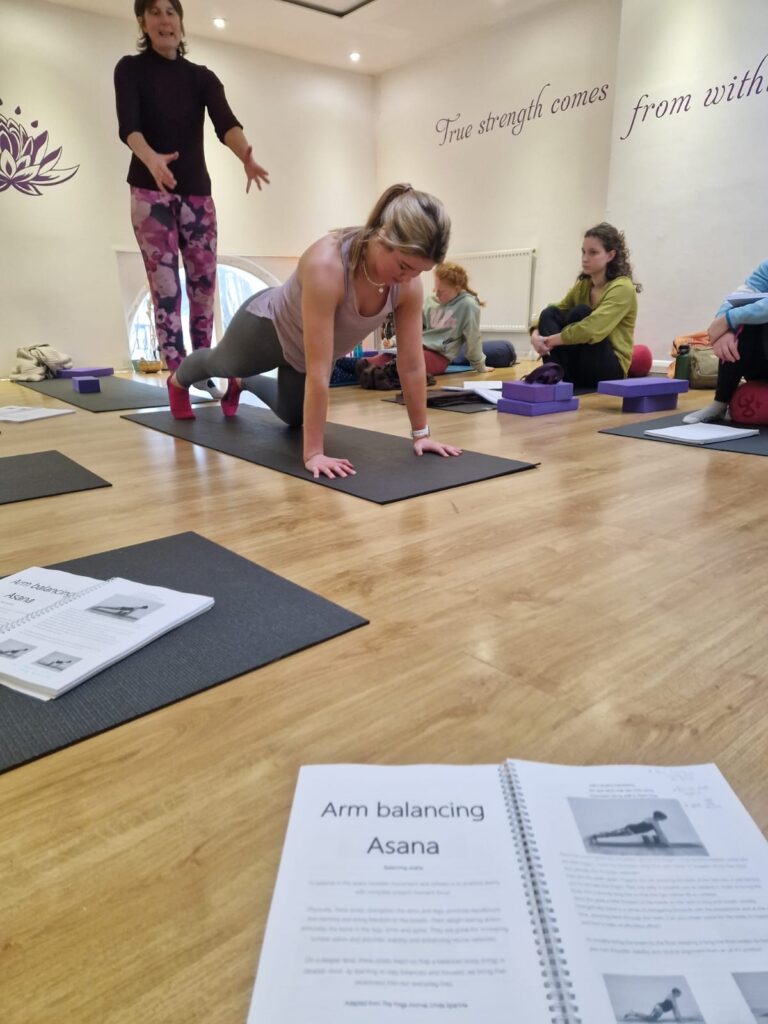
But here’s where I think we need to be discerning. Completing 500 hours of training isn’t necessarily the same as having 500 hours of teaching experience.
You can learn an enormous amount through training, but actually standing in front of a group, responding to different people, adapting your approach and finding your confidence as a teacher is something that develops through practice. And, importantly, through feedback.
From the information currently available, it isn’t entirely clear whether the revised E-RYT designation will include a minimum number of practical teaching hours. Training and teaching hours are expected to be recorded through the Yoga Alliance portal, which should help provide a fuller picture of a teacher’s background.
I’d welcome further clarity on this. For me, knowledge and experience go hand in hand. Neither should be overlooked. Simplifying the teacher credentials may make the system easier to understand, but the designation alone won’t necessarily tell you everything about a teacher. Their training, teaching history, specialist knowledge and approach to working with students all contribute to the bigger picture. And of course, a teacher’s personality, style and ability to create a welcoming environment matter too. Students often return because they feel supported, enjoy the experience and trust the person leading the class.
A great yoga teacher is developed through a combination of knowledge, practical teaching, meaningful assessment followed by constructive feedback, and experience.
These are key pillars of the training experience we offer at Harmonise. I want our graduates to leave not simply knowing about yoga, but feeling genuinely prepared to teach it.
What do these changes mean for training schools and students?
While much of the discussion has focused on what’s changing, some important aspects of the existing framework are expected to stay in place. Yoga Alliance has indicated that registered schools will have one overarching RYS credential, whilst continuing to recognise different training categories, including 200-hour, 300-hour and 500-hour programmes, alongside specialist training such as prenatal and children’s yoga.
Yoga Alliance’s new framework includes business verification, a defined educational framework and more regular checks on school policies and compliance. Schools will also need to renew their ethical commitment annually, verify their teachers’ credentials and respond to student reviews.
Schools will also continue to have flexibility in how they deliver training, including in-person, live online and on-demand learning, subject to the relevant requirements. And this brings me to something I feel quite strongly about:
The value of learning together, in person
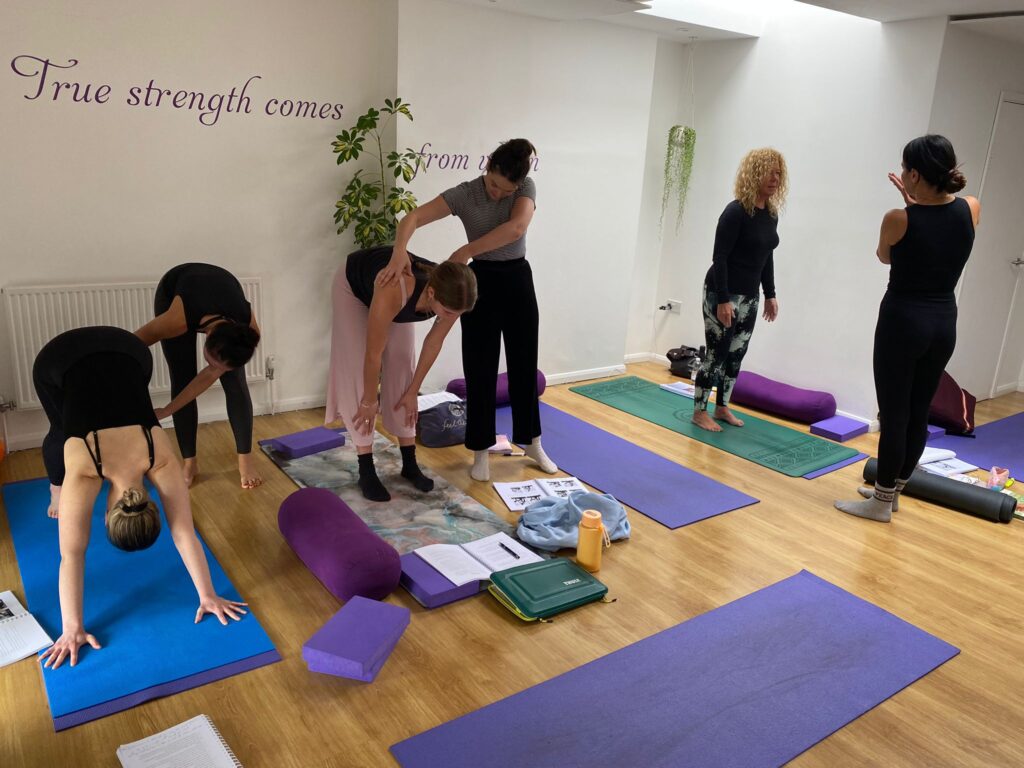
Technology has opened up some fantastic opportunities for learning, and there’s certainly a place for online resources. But when it comes to training yoga teachers, I genuinely believe there’s something special, and incredibly valuable, about being in the room together.
You learn so much from observing different bodies, practising with other people, asking questions as they arise and receiving immediate feedback – experiences that are difficult to replicate online. You also learn from the conversations, the shared experiences and sometimes the unexpected moments that happen along the way.
There is also real value in being able to access additional resources to support your learning and practise between sessions. Online resources can reinforce understanding and help students consolidate their knowledge.
At Harmonise, we strongly believe that in-person training is the gold standard for developing confident, capable yoga teachers. That’s why in-person teaching remains central to our approach at Harmonise, supported by learning resources that students can revisit in their own time and refer back to after graduation.
We also make clear on our training certificates that students have undertaken in-person training and passed assessments. It’s important to us that their qualification reflects not just attendance, but the learning and practical skills they’ve demonstrated.
And what about reviews?
Yoga Alliance already uses student feedback as part of its monitoring of registered schools. What’s changing is the role those reviews will play in monitoring registered schools. Under the revised framework, schools will be expected to maintain a minimum average rating (3.5 stars), with additional scrutiny if their score falls below the required threshold. Schools with consistently high ratings (4.5 stars or higher) can earn a Certificate of Excellence.
Feedback is valuable. It can help prospective trainees understand the experience of previous students and encourage schools to continually improve their programmes. But, as with any review system, it doesn’t tell you everything. A five-star rating might tell you that someone thoroughly enjoyed their course, but it doesn’t necessarily tell you how they were assessed, how much teaching practice they completed or how well prepared they felt to teach afterwards.
Which brings me to something I really want to encourage anyone considering yoga teacher training to think about…
Choosing your training
When you’re looking at yoga teacher training courses, there’s a lot to consider. Registration with a recognised body like Yoga Alliance is an important consideration, but the quality of your learning experience should be just as important. I’d always encourage you to do your research.
Ask yourself:
- Will I learn from experienced tutors who are committed to helping me develop?
- Will I have plenty of opportunities to practise teaching?
- Will I receive constructive feedback to help me improve?
- Will I be assessed on my ability to teach, rather than simply my attendance?
- Will I learn how to create safe, inclusive and engaging classes?
- Will I leave feeling prepared to take my first steps into teaching?
- What ongoing support and opportunities for further development will be available?
And don’t be afraid to dig a little deeper. Are there independent reviews you can read, such as Google reviews, rather than just testimonials on the school’s website? Is the training provider open and transparent about student feedback? Would they be happy to put you in touch with a recent graduate so you can hear about their experience first hand? It’s something we’re always happy to arrange at Harmonise.
But I also think there’s something to be said for trusting your intuition.
Does the training feel right for you? Do you connect with the people delivering it? Do you feel comfortable asking questions? Can you imagine yourself learning and growing in that environment?
Sometimes we can become so focused on comparing qualifications, prices and course hours that we forget to consider the actual experience of learning.
And that’s a big part of what makes training meaningful.
Our approach
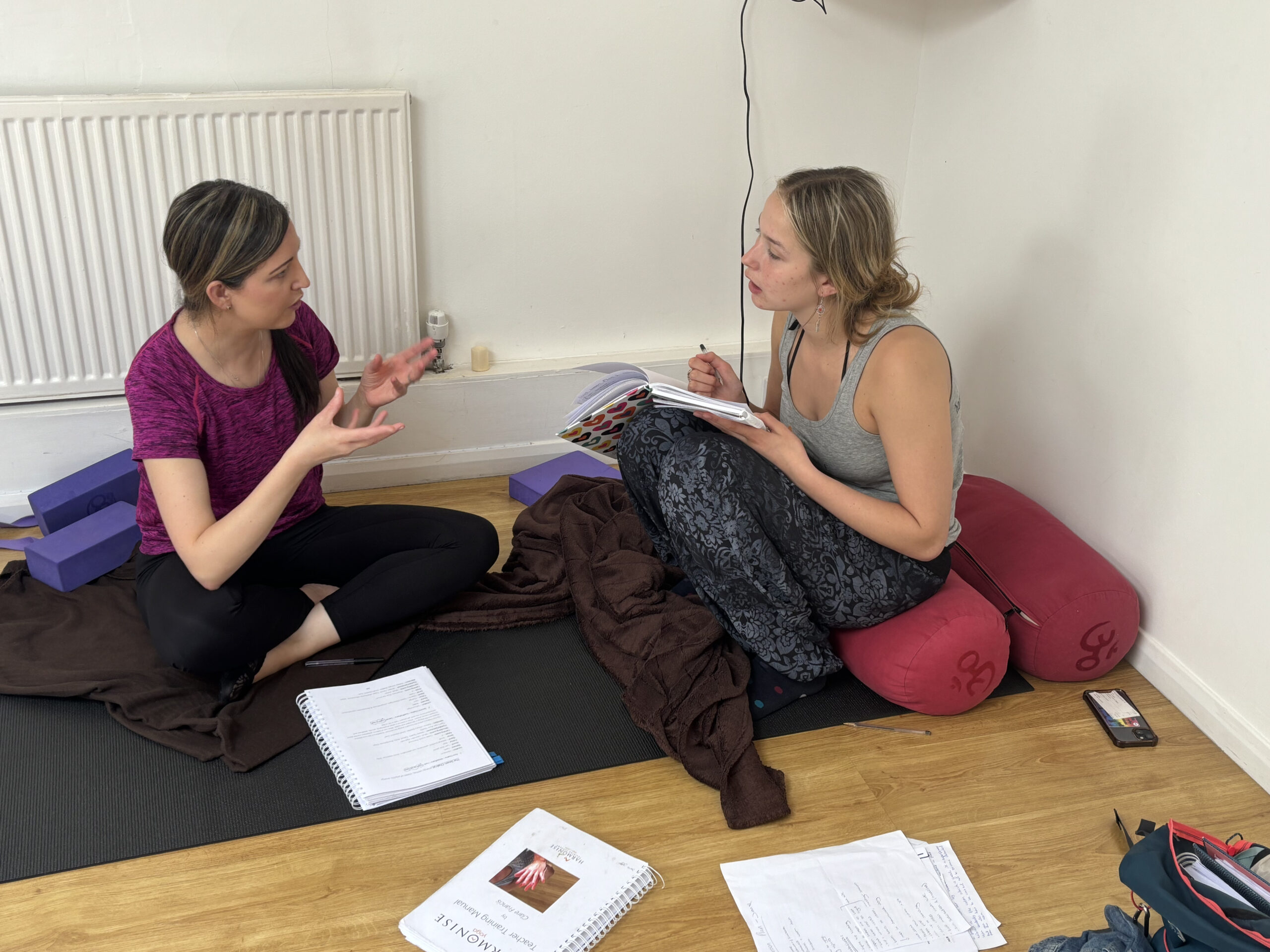
At Harmonise, we’ve always chosen to keep our groups small enough for people to feel seen, supported and able to develop at their own pace. For me, getting to know our students, understanding their individual strengths and helping them grow in confidence is one of the most rewarding parts of what we do.
Our courses combine in-person learning with opportunities to develop practical teaching skills and demonstrate competence through assessment. We want our students to understand not only the principles of yoga, but also how to apply their knowledge in real teaching situations.
We’re not here to get as many people as possible through a qualification. We believe that every trainee deserves the time, attention and encouragement they need to become the best teacher they can be.
If you’re considering training, do your research. Ask practical questions, compare your options and, if you can, meet the tutors or try a class. Find out how much teaching practice is included, how you’ll be assessed and what support you’ll receive. And pay attention to how you feel. The right training should offer a balance of professional standards, practical experience and personal support, as well as feeling like a good fit for you.
I welcome the direction of Yoga Alliance’s changes, particularly the greater emphasis on safety, professional responsibility and continued learning. There are still details to be clarified, and I’ll be interested to see how the revised requirements work in practice.
But ultimately, the changes are also a reminder that a qualification alone cannot tell you everything about a teacher. The quality of the training, the opportunity to put learning into practice, and the feedback and support received along the way all play a part in preparing someone to teach well. That’s what I believe a good teacher training experience should be about: helping people develop the knowledge, skills and confidence to make a real difference to the people they teach.
If you’d like to explore training with Harmonise, we’re always happy to have a chat, answer your questions and help you decide whether one of our courses is right for you.
Article by: Clare Francis


