10 reasons to use hands-on assists in your yoga classes (and why it matters more than ever)
“Touch is far more essential than our other senses.
Diane Ackerman
It’s ten times stronger than verbal or emotional contact.”
I started my career in the health and fitness industry as a holistic and then sports massage therapist. I then taught small group Pilates for 15 years and used hands on assists throughout all of my classes.
So when I came to Ashtanga yoga, the use of ‘adjustments’ felt normal to me. However, I could see that some of the ways they were taught during some of the workshops I attended could easily lead to injuries. Over the years I have witnessed so called ‘Gurus’ standing on students, sitting them on their laps in chair pose, pulling them, vigorously pushing them down on their shoulders in splits… It’s no wonder they have received bad press.
However, when applied with consent, conscious awareness, confidence and sensitivity, ‘hands on assists’ can add so much value to your Yoga classes at a time when loneliness, disconnection and isolation are on the increase. Human touch plays an essential role in well-being, especially when it comes to stress, resilience and mental health.
With that in mind, here are 10 reasons when to use thoughtful, appropriate, consent-led hands-on assists and why they are, more than ever, one of the most valuable, and beneficial, tools in a yoga teacher’s kit.
1. When a verbal cue hasn’t connected
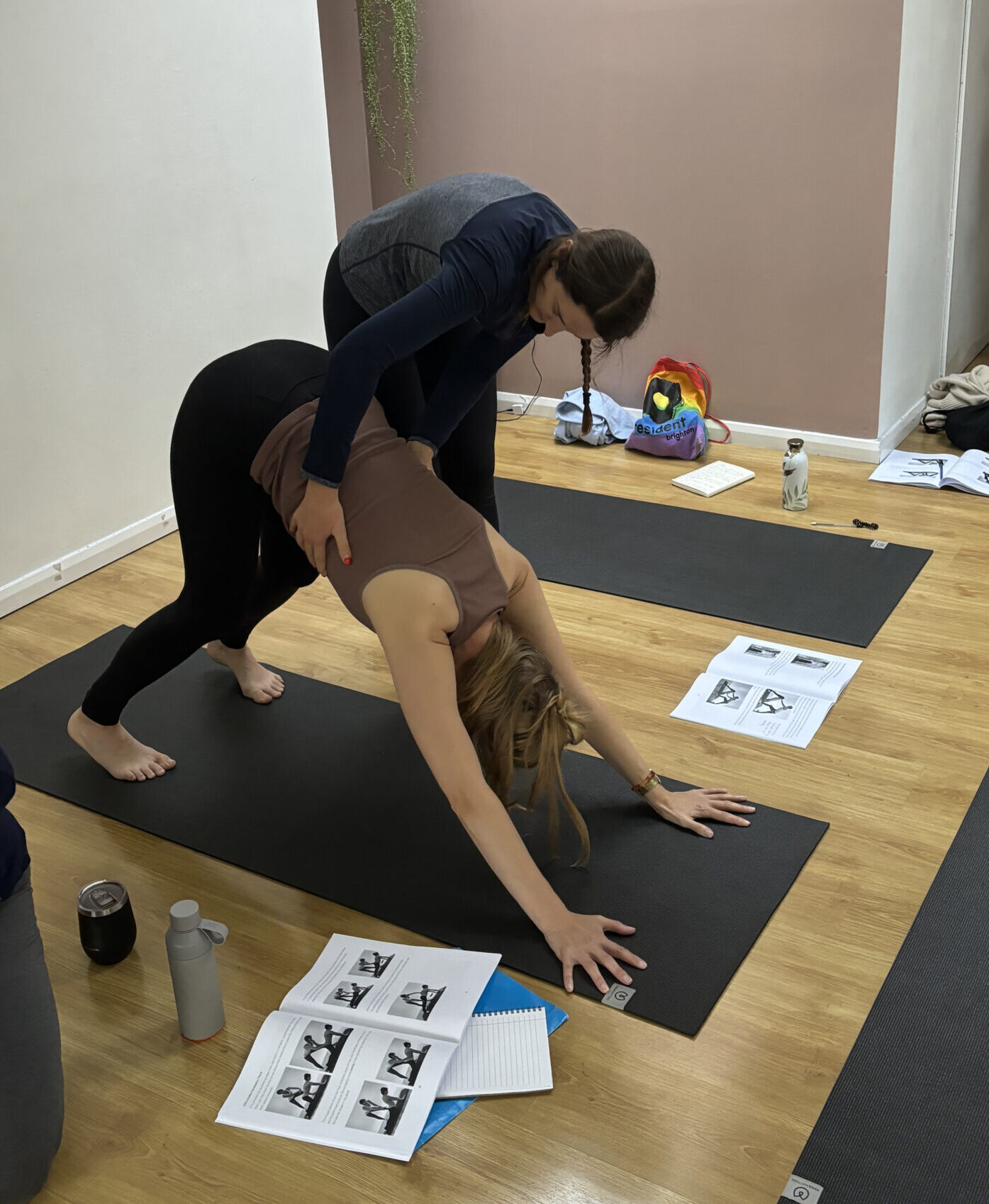
Sometimes a student simply doesn’t respond to a verbal cue. This is not because they are not listening or not trying. It could be due to limited body awareness, distraction, dissociation, sensory motor amnesia, or difficulty understanding or embodying the verbal cue. A well-placed hands-on assist can bridge that gap, increasing proprioception and strengthening neural connections in a way words alone can’t always achieve.
2. When a visual demonstration isn’t enough
Demonstrations are a valuable teaching tool, and can be very effective, but they don’t always produce the intended response. A hands-on assist can communicate what both words and visuals have failed to convey, stimulating proprioceptive feedback and supporting the development of neuromuscular patterning that builds over time into embodied, intuitive movement.
3. When props aren’t available or aren’t working
Props are fantastic and can support students in so many ways, often replacing the need for a hands-on assist. But they’re not always to hand, not every student knows how or when to use them – or may think they don’t “need” them. In those moments, a sensitive assist can provide the support a prop would otherwise offer. Or you might use the assist alongside guiding the student towards the right prop, so they can replicate that support independently in future.
4. To introduce and teach self-assists
Self-assists are a fantastic tool during a yoga class, empowering students to incorporate them into their own self-practice. They encourage self-awareness, embodiment and a deeper connection to self. They can also support students in learning to down-regulate their own nervous systems independently, fostering a real sense of agency.
Hands-on assists can be a powerful way to introduce them, helping students understand exactly where to place their hands, how much pressure to apply and what sensation to look for. Once a student has felt it guided by you, they’re far better equipped to replicate it independently and safely.
5. To encourage neutral alignment
Every body is different, and not every student will look the same in any given posture. With that in mind, you can use assists to help your students move towards a more neutral alignment depending on their posture and range of movement.
This might mean encouraging the spine to lengthen, inviting more activity into the network, suggesting the chest opens, creating space around the hips, side body or waist, stabilising the pelvis to reduce compensation patterns, or supporting grounding and stability.
6. To modify an asana to suit a student’s range of movement
Where range of movement is restricted (whether due to age, muscle tightness, joint mobility or the natural variation in how bodies are built) or when injury is present, an assist possibly alongside the use of props can help reposition a student safely. This supports them towards a more functional expression of the pose without strain or compensation.
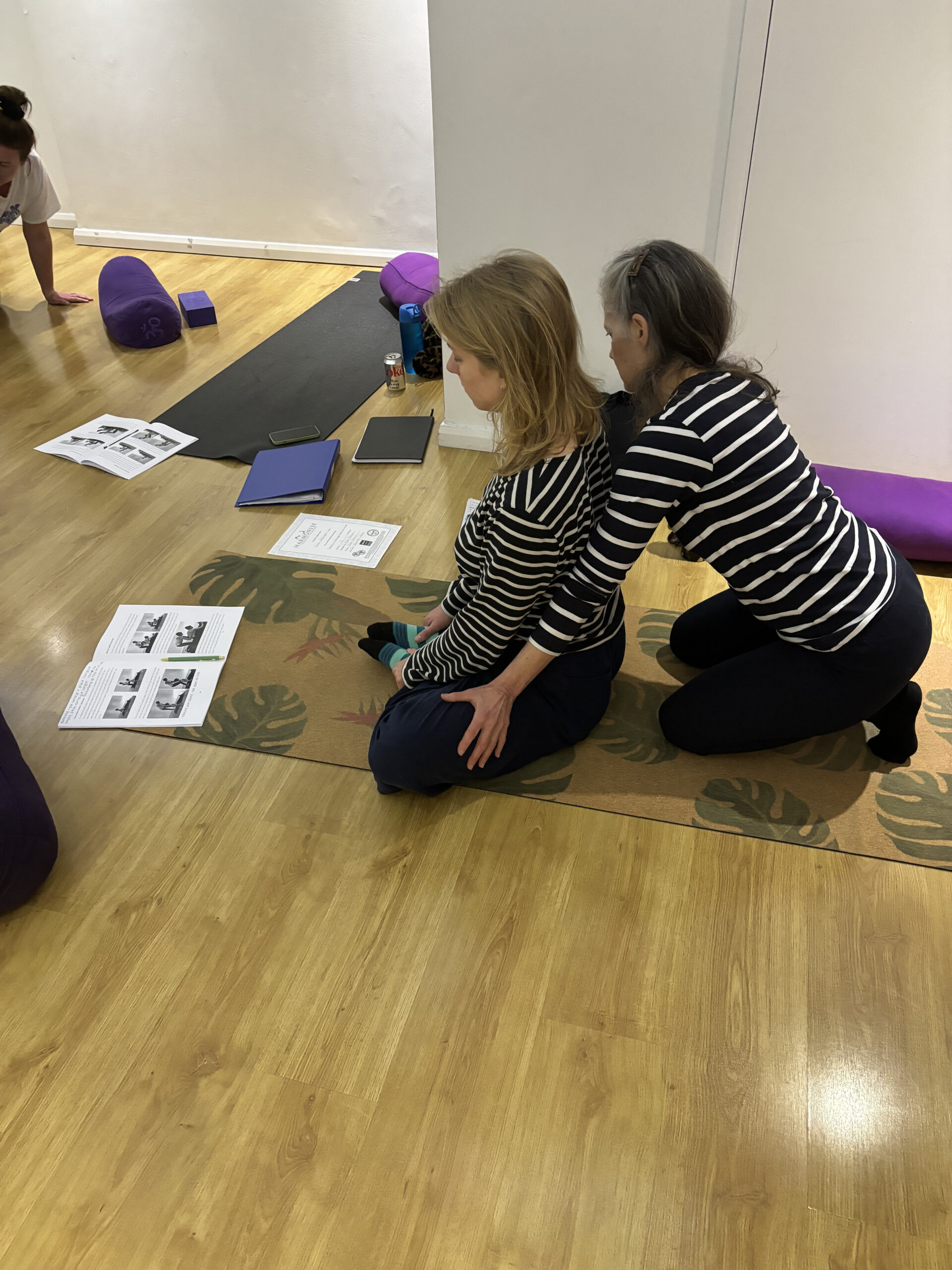
7. To support a deeper expression of the pose
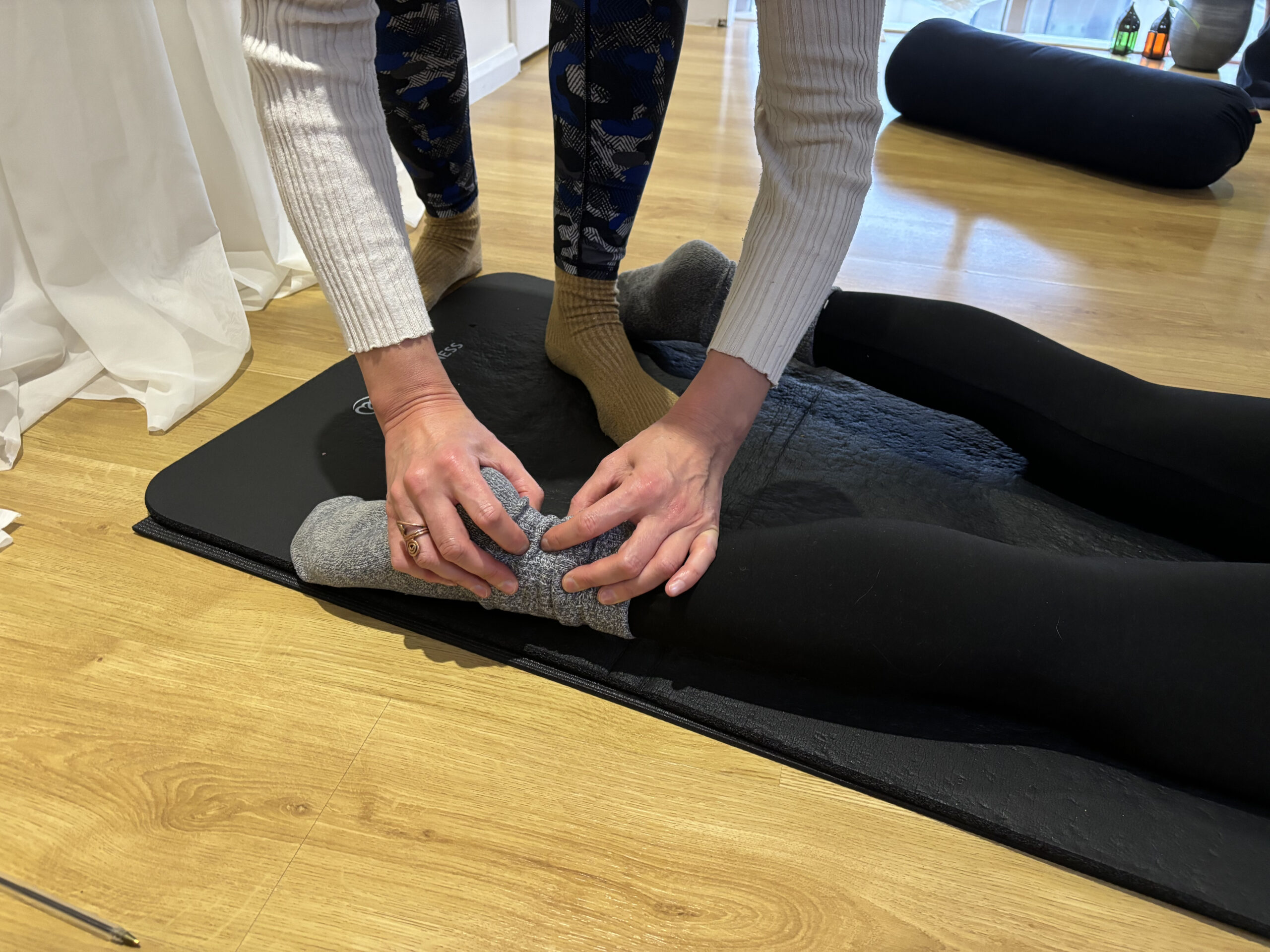
This is perhaps the most nuanced use of hands-on assists, and it requires a great deal of sensitivity and two-way communication, including non-verbal! It is important that you are constantly observing and reading posture, breath and facial expression throughout, as well as receiving verbal feedback. Remain responsive at every stage.
8. For partner stretching and targeted release
Partner stretches create a feedback loop between teacher and student, they can be very specific meaning they are best suited to one-to-one session, where a specific area of restriction has been identified.
9. To support relaxation through massage, breath and body awareness
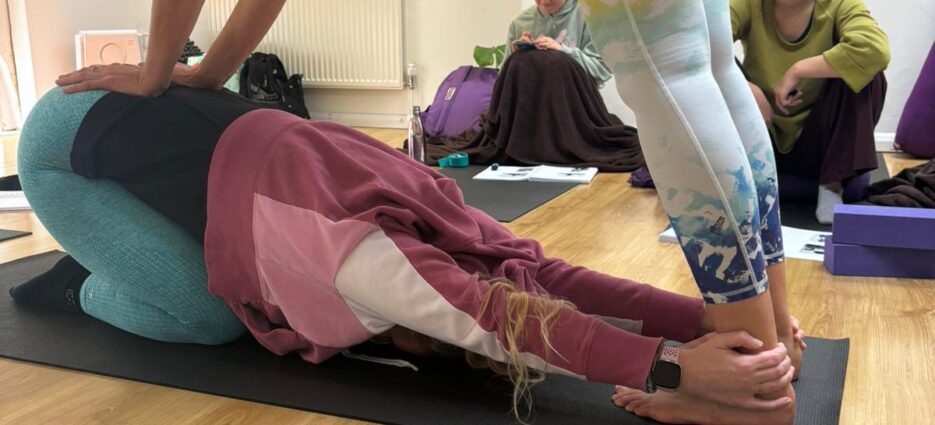
Placing hands on the body can encourage a more functional breath, deepen interoception and stimulate the parasympathetic nervous system, inducing a state of calm and aiding students ability to let go. In postures like child’s pose and savasana, this creates a beautiful opportunity to use hands on assists to mindfully stretch and massage students. In my experience, it’s often the part of class they love the most.
10. To add real value to your teaching and build a loyal, returning student base.
Where consent has been clearly and comfortably established with individual students, hands-on assists will add a great deal of value to your classes and can set you apart from other teachers. When offered thoughtfully and with sensitivity, they elevate the in-person experience in a way that online classes simply can’t replicate. They foster a personal, two-way relationship and help students feel genuinely supported by you and safe, which keeps them coming back.
For those offering one-to-one yoga sessions, hands-on assists are a core part of what clients are investing in; they expect a more personalised, attentive experience.
So why aren’t more teachers offering hands-on assists?
If I had to guess, the number one reason teachers hesitate to incorporate hands-on assists into their teaching is fear and a lack of confidence (especially for those who have completed online only training courses). And if that’s where you are right now, I would wholeheartedly agree that it’s best stick to verbal cuing, demonstrations and props until you feel ready. As I always say on my trainings:
“If in doubt, leave it out.”
Your students will pick up on any uncertainty energetically. An assist that isn’t delivered with confidence simply won’t feel good to receive.
It’s also worth acknowledging that the wider conversation around touch, consent and safeguarding – shaped in part by world events, which has understandably made many teachers more cautious. Add to that a lack of trauma-informed training, and uncertainty around how to establish consent sensitively and skilfully, and it’s easy to see why so many teachers simply opt out altogether.
But it doesn’t have to be that way. Having the right training and approach makes all the difference, knowing not just how to offer hands-on assists, but when, why, and equally importantly, when not to. Because the benefits of appropriate, consensual touch go far beyond helping a student find the right alignment. As mentioned, loneliness, disconnection and social isolation are on the rise, yet touch plays a quietly profound role in human wellbeing. Research points to its ability to lower cortisol levels, reduce anxiety, increase oxytocin, support immune function and even regulate heart rate and blood pressure. It communicates safety in a way words rarely can, and in a yoga class, that sense of being genuinely held and supported can be transformative.
Build your confidence offering hands-on assists
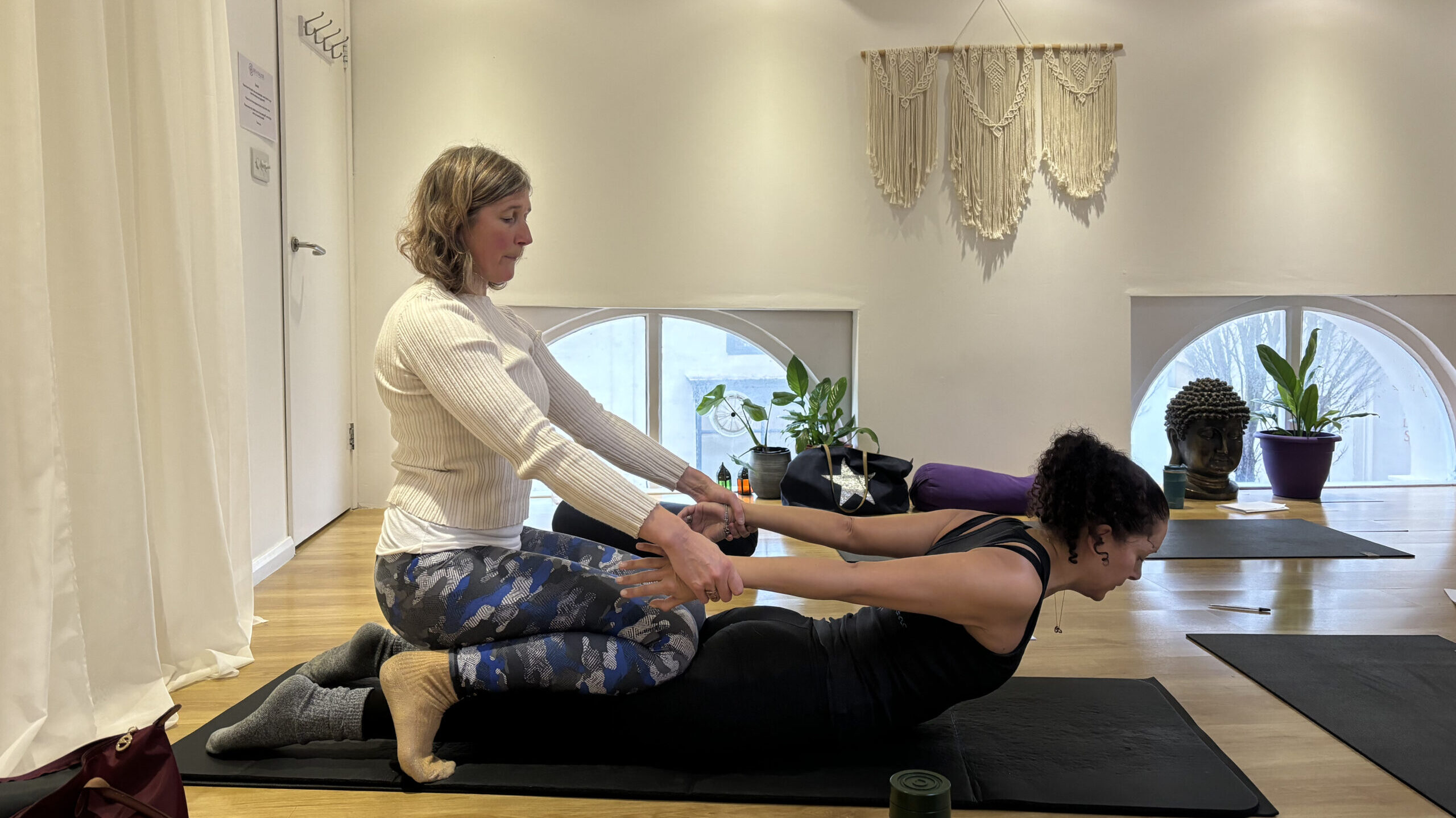
If you’d like to feel more confident in how, when and why to offer hands-on assists, I’d love to see you for our 1 day course for yoga teachers on October 7th. This highly practical one-day CPD course, recognised by Yoga Alliance is aimed at teachers who are already in practice, and builds on your foundations and observational skills. Everything you learn can be put into practice straight away. You can book your place here, or email clare@harmonisetrainingacademy.com with any questions
If you would like to find out more, all the details are here.
And if you’re earlier in your journey, hands-on assists are introduced as part of our 200-hour Yoga Teacher Training, where we cover the most accessible and widely used techniques in a safe, trauma-informed and supportive environment.
Article by: Claire Francis


