From Pain to Connection: How specialising in diverse bodies can transform your teaching (and your practice)
Twenty-five years ago, I severely injured my back, which has led to chronic pain that comes and goes throughout my life. There have been times during my teaching career when I have not been able to demo or even sit down at all. Although this has been tough, it has taught me to give clear cues and to find practices that help restore my mobility as quickly as possible.
Gone are the days where I would be laid up for weeks. Now I know how to manage ongoing pain, minimise it, and reduce flare ups. I am grateful to have chosen yoga as my career, as it’s meant I have needed to keep moving. Many people become fearful and stop moving altogether, which leads to a lack of mobility and, eventually, disability.
I also feel confident that if someone turns up my weekly yoga classes or retreats with back pain, I can provide them with appropriate guidance and suggestions to try.
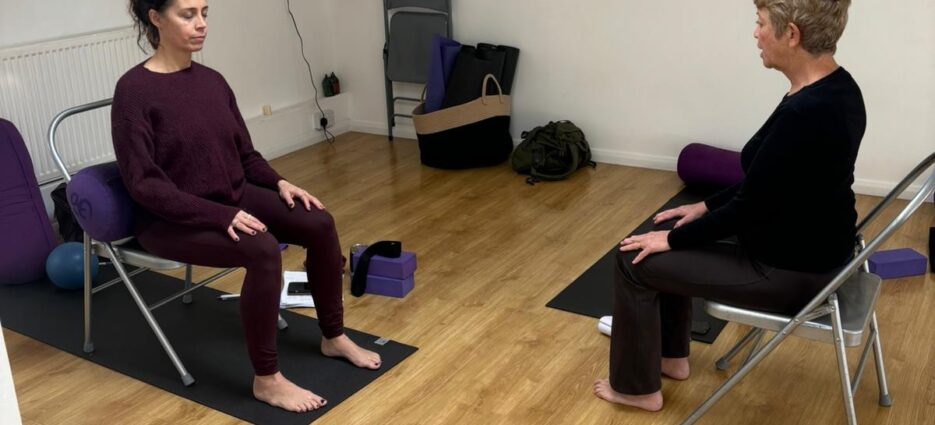
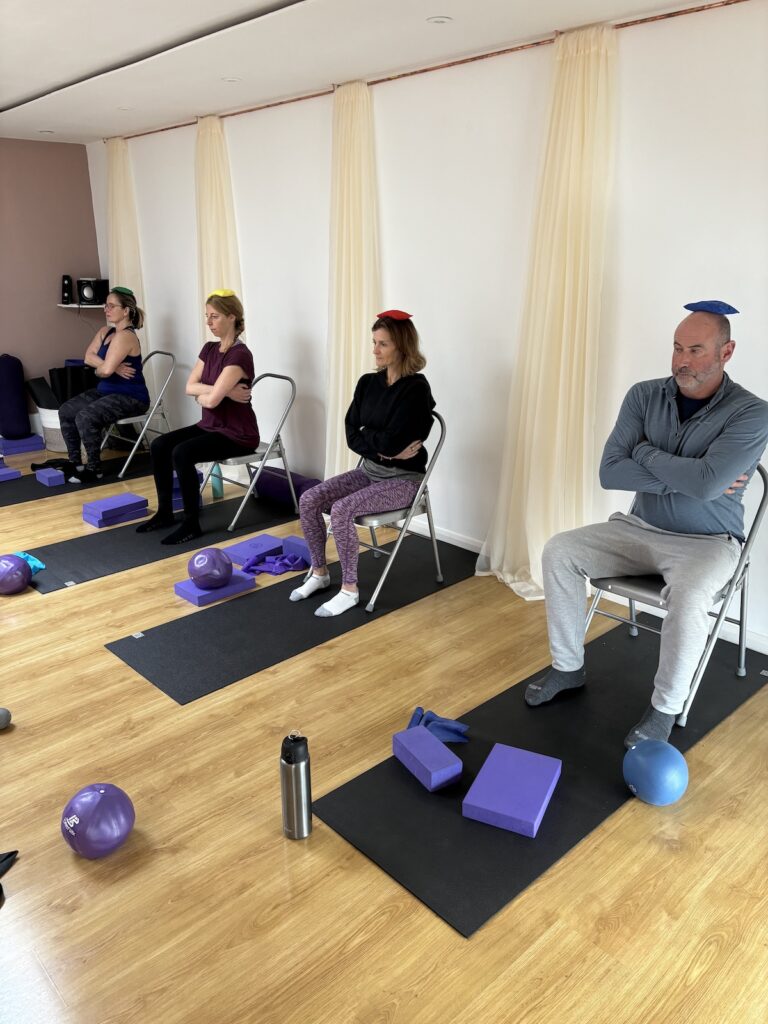
I have been teaching yoga at The Sussex MS Centre for over ten years. I teach a mix of mat and chair yoga classes to suit the different ages (up to 93!), abilities and disabilities. I can honestly say these groups are a joy to teach. The participants are brave, positive and open to giving anything a try. They share openly when they are struggling, as well as celebrate each other’s successes.
It’s not just a class where people come, sit on their mat, do their practice, and leave. It’s a community. People stay for coffee and cake afterwards, they sharing their life stories and offering lifts to those who need help getting there.
Teaching classes like this has helped me to think outside the box and make yoga accessible for all bodies. This not only benefits the people at the MS Centre but also instills confidence in me to provide options to anyone who attends my classes, regardless of their aches, pains, or conditions. I can teach yoga to anyone.
Teaching outside the traditional studio context
Another opportunity which has arisen due to my specialist experience in this area is a collaboration the NHS to run six-week Mindful Movement for Chronic Pain courses at three local surgeries in Shoreham and Southwick, through the Brighton Natural Health Foundation. The surgeries were so overwhelmed with people coming to see them with chronic pain (for different reasons) and there is only so much a doctor can do. Chronic pain is something you have to learn to manage and live with.
With the NHS facing significant overload and an ageing population, there is a growing recognition of the need for social prescribing within the health service. This presents exciting opportunities for teachers to make a real difference by leveraging their skills and doing what they love.
From my experience running these various classes, I’ve discovered that yoga isn’t just about physical practice. Breathwork, meditation, mindful awareness of thoughts, acceptance, and connection with others also play crucial roles. For people struggling with pain, illness, or loneliness—especially older adults living alone—connection becomes one of the most vital aspects of their wellbeing.
In 2025, 25% of adults reported feeling lonely “often or always” or “some of the time.” These statistics underscore the ongoing issue of loneliness in the UK. According to a report by NHS England Digital, persistent and prolonged feelings of loneliness have been linked to adverse effects on both wellbeing and health.
I am excited to share everything I have learned in the Older Adults, Common Conditions, and Back-Care CPD course starting on 24th September.
This course is designed to help you support people with different health conditions, enabling you to confidently include them in your classes. Additionally, you will learn how to create your own specialised outside of a traditional studio settings. From Yoga and Pilates focused on back care to chair yoga sessions in residential homes, or classes held at local support centres or village halls, this course will equip you to share your skills with a broader audience.
With the growing number of yoga and Pilates instructors and many studios already operating on full schedules, this course gives you a different offering to teach away from studios. It’s often better paid as well. Many studios and students are now using ClassPass, leading to fewer regular students and reduced pay for instructors, as ClassPass compensates studios at a lower rate. Therefore, exploring opportunities outside of the traditional studios may provide better payment or more consistent class attendance.
What does the course cover?
Throughout this course, we will address a variety of common health conditions and a range of back issues, including both non-specific back pain (NSBP) and diagnosed conditions.
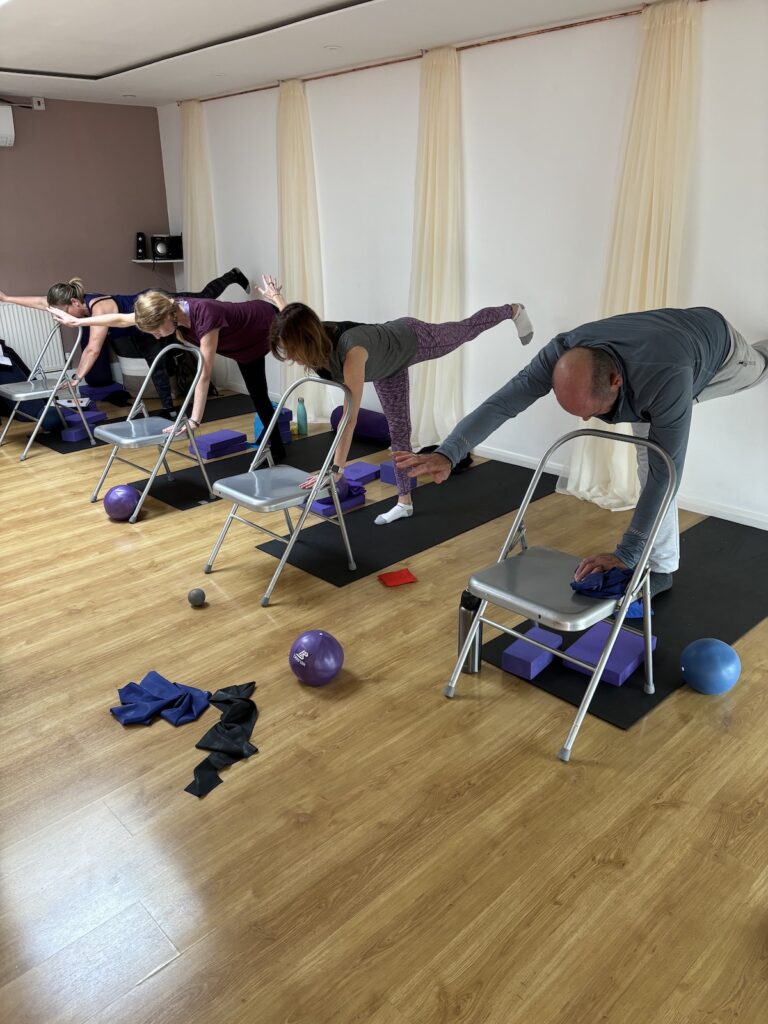
You will be introduced to a variety of exercises and poses, including those involving chairs and walls, helping you become more confident in addressing common health conditions and related issues.
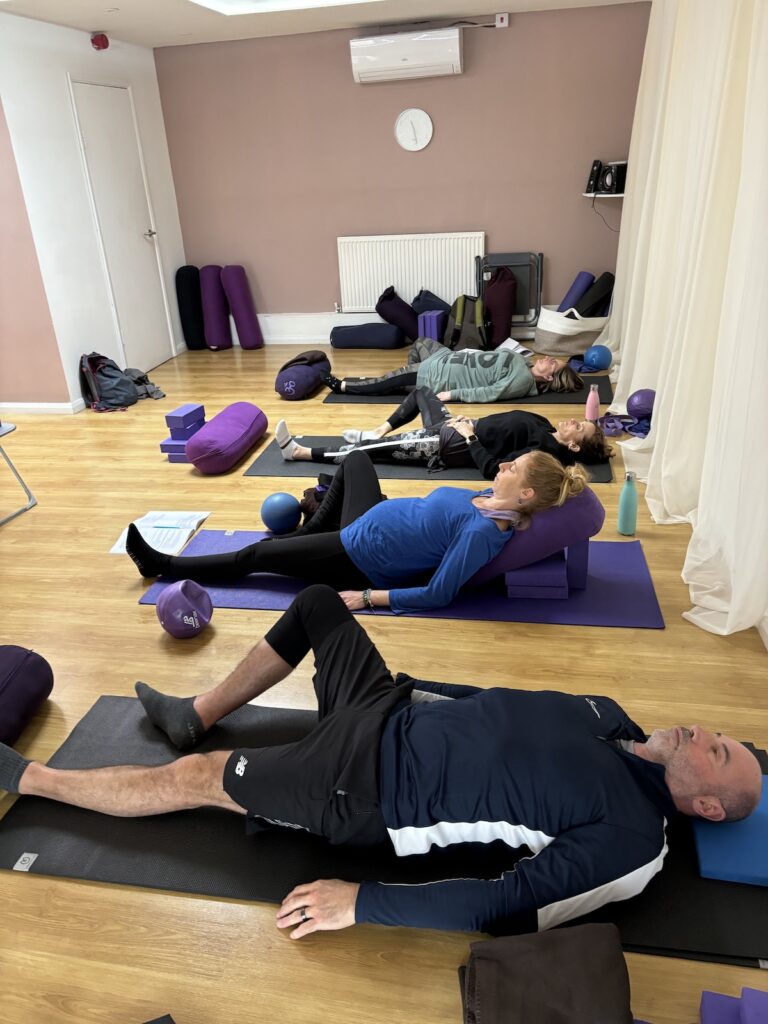
We will cover topics such as pain—distinguishing between acute and chronic pain—and explore how chronic pain originates in the brain. You’ll learn pain management techniques, understand poly vagal theory, and explore the nervous systems role in stress and trauma, we’ll discuss sensitisation, protection, posture, and emotions in relation to pain, as well as the concept of sensory motor amnesia. Additionally, we will delved into interoception, language of embodiment, and ways to empower your students.
This course will broaden your audience, expand your selection of exercises and asanas, and enhance your teaching methods—including your cues, assists, and overall language. It will encourage you to think creatively and embrace new approaches.
If you would like to find out more please see this page.
24th–27th September 2026, 9.30am–4.30 pm each day
SUPER Early-bird savings until 24th May 2026
Article by: Louise Windsor


