
How a Yin Yoga Training Can Deepen the Way You Teach
In a world where everything is moving faster, louder, and more intensely, Yin Yoga offers something quietly revolutionary: stillness, depth, and space.
As yoga teachers, our 200-hour YTT often trains us to guide movement, alignment, strength, and flow. We learn how to energize bodies, inspire students, and create dynamic classes. But at some point, in most teaching journeys, a deeper question appears:
How do we teach students not just to move… but to do less, be still and listen? For me, Yin Yoga — and especially completing a Yin Yoga teacher training — answered that question in a profound way.
What Is Yin Yoga, Really?
Yin Yoga is a slow, meditative practice where postures are held for longer periods of time, usually between 3 and 5 minutes or even longer. Instead of primarily targeting muscles, Yin focuses on deep connective tissues: fascia, ligaments and joints.
But Yin is much more than stretching and holding poses. It is a practice of:
Stillness
Sensation awareness
Patience
Relinquishing control
Observing the mind
Being with what is
Living in harmony with nature through Taoist philosophy
In a world (and sometimes yoga culture) that often celebrates effort and performance, Yin teaches the opposite: being instead of doing.
Why Yin Yoga Is So Powerful for Students
From a student perspective, Yin Yoga offers benefits on multiple levels:
Physically, it can:
- Improve joint mobility
- Hydrate connective tissue
- Supports healthy fascia
- Balance more dynamic or yang-style practices
- Help prevent burnout and overtraining
Mentally & emotionally, it can:
- Calm the nervous system
- Help to reduce stress and anxiety
- Build emotional resilience
- Teach students to stay present with discomfort instead of avoiding it
Many students don’t realise how much tension they are holding until they finally stop moving.
Why Doing a Yin Training Is a Game-Changer as a Teacher
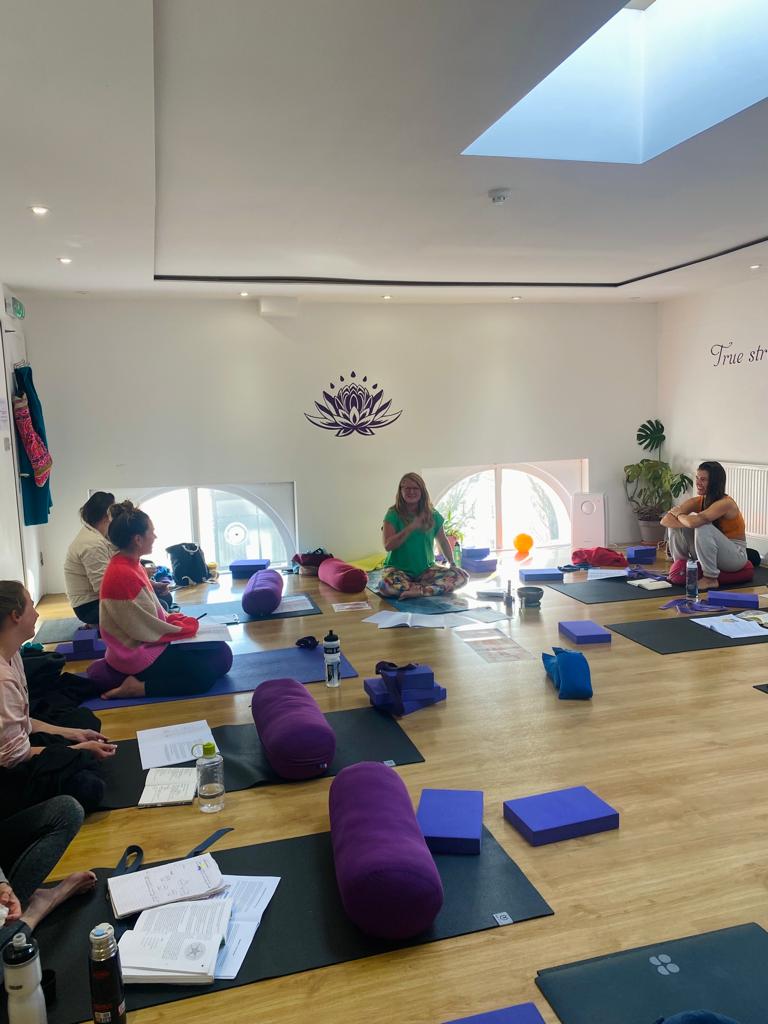
You could start teaching Yin with a short workshop or online course, but doing a full Yin Yoga training shifts something much deeper in the way you hold space, cue, support, and even see your students.
Here’s why:
1. You Learn to Teach Stillness (Not Just Shapes)
Yin is not about achieving a perfect-looking pose. It’s about:
- Finding the right amount of sensation
- Respecting individual anatomy
- Teaching students to stay connected to their own experience
A good Yin training teaches you to:
- Offer intelligent, safe variations
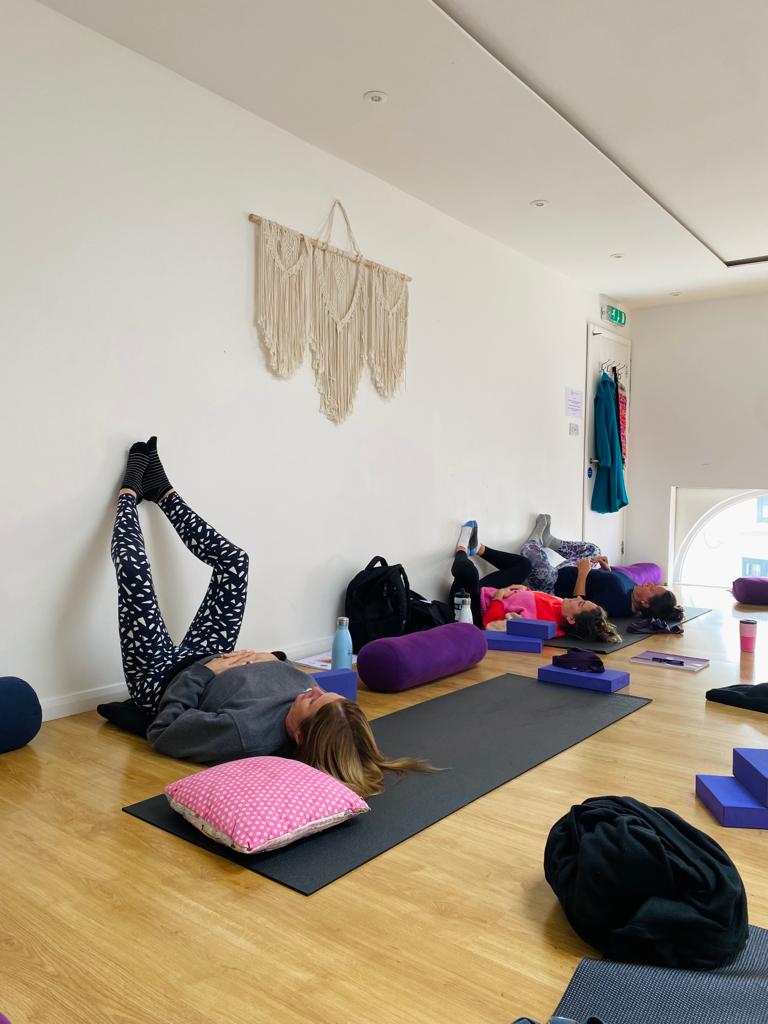
- Use props for support
- Read bodies energetically as well as mechanically
- Guide students inward instead of pushing them further
2. You Deepen Your Understanding of Anatomy and Fascia
Our comprehensive Yin trainings explore:
- Fascia lines and connective tissue
- Joint health and compression vs. tension
- Skeletal variations and why poses look different in different bodies
- The nervous system and how to calm it
- This knowledge doesn’t just make you a better Yin teacher — it makes you a better teacher in every style of yoga
In Yin Yoga, you stop forcing shapes and start respecting structures.
3. You Learn How to Hold Space, Not Fill It
One of the biggest shifts for many teachers in Yin training is learning to:
- Talk less
- Allow silence
- Trust the process
Instead of constantly “doing,” you learn how to hold a container for students’ experiences.
This skill translates into:
- A calm present class atmosphere
- Deeper student trust
- More emotionally safe spaces
4. Your Own Nervous System Changes
Perhaps the most unexpected gift of Yin training is what it does to you. Many teachers realize:
- How much they themselves are in constant “doing mode”
- How hard it is to truly rest
- How uncomfortable stillness can be
Through Yin, you don’t just learn a new style of yoga. You learn a new relationship to rest, patience, and presence — and your students feel that immediately.
Yin as a Counterbalance to Modern Yoga Culture
Modern yoga can sometimes become performance-oriented, fitness-driven and achievement-focused. Yin brings back something essential: Yoga as a practice of listening, not conquering.
Offering Yin in your schedule — and being properly trained to do so — creates balance not only for your students, but also for your teaching career. It helps to prevent:
- Teacher burnout
- Physical overuse injuries
- Emotional exhaustion
Is Yin Training “Worth It” as a Teacher? If you want to:
- Diversify your offerings
- Support students who are stressed, anxious, or burnt out
- Deepen your understanding of bodies and nervous systems
- Learn more about Taoism and Chinese Medicine
- Grow not just as a teacher, but as a human
Then yes — absolutely.
A Yin Yoga training is not just a certification. It’s a perspective shift.
Yin Yoga reminds us that not everything needs to be pushed, fixed, or improved.
Some things need to be felt, allowed and given time. Sometimes less is more.
And as yoga teachers, learning to guide others into that space is one of the most valuable skills we can develop.
Article by: Louise Windsor


